

Telkom & MTN: Massive, not Maziv…
MTN is in discussions to acquire all of Telkom, notwithstanding that past deals failed when MTN’s primary target was ‘only’ Telkom’s fibre or spectrum assets.
This is a complex transaction and some industry commentators suggest it might succeed because the playing field has changed. After all, authorities allowed the merger of Vodacom and fibre operator Maziv, which sets a precedent that might make the approval of an MTN/Telkom merger ‘easier’.
If this happens, it could be the first industry merger where two operators’ customer bases are combined. It’s still not clear how the entities will approach this, or whether that part of the deal will be approved.
Usually, in transactions like these, there’s little to no information available that accurately describes the features of such large, amorphous customer groups, making it difficult for analysts to identify valuable synergies for a differentiated outlook. Slant is here to help – our transaction data clearly delineates customer segments and characteristics.
While Telkom’s underlying fibre assets may be the main attraction, the difference in subscriber demographics present a real opportunity.
To assess this, an analyst may want to know:
- How customer demographics compare across the networks
- How mobile spend progresses across networks and demographics
- How networks overlap – to judge potential cannibalisation
Clients have access to all the data to answer the questions above. If you would like to receive the full report, please contact us.
Prescribed complexity
Dis-Chem reported relatively robust retail revenue growth for the six months to August (8.1% compared to 9.7% in the preceding six months) indicating it gained market share. Clicks saw a much sharper deceleration in retail sales: 5.4% to 3%.
Unfortunately, Dis-Chem’s costs increased at a faster rate, resulting in retail operating profit falling 4% and headline earnings down 13%. The share price response was brutal: down 20%+ to levels last seen during Covid times.
The elevated cost growth was attributed to investments in an array of endeavours that management believe will pay off in the future, including new store formats, a new rewards programme, and what it calls X, bigly labs– its innovation and development arm.
Most interesting to us, however, is that Dis-Chem also described a restructuring process underway to simplify reporting, with a plan to reduce direct reports to the CEO from 24 per year, to 14.
Now, Slant is only experienced at commenting from outside big business, but 24 direct reports sounds awful. It got us thinking about the organisational complexity at the listed retailers, and whether we could use data to evaluate this…
To start, we turned to CIPC – the Companies and Intellectual Property Commission – for information about how many director positions in total the Executive Directors of the listed retailers hold.
The typical board structure of a listed retailer includes two Executive Directors – usually (the CEO and CFO) and these individuals normally also sit on the boards of the subsidiary entities that own the assets and operations of the retailer.
We searched the boards of all the listed retailers and focused on all the Executive Directors’ other director positions – as an indicator of the complexity of the organisational structure. Our rationale is that the more entities an executive is responsible for, the more complex the operating structure of the business, the more time the Director is dedicating to mandatory governance activities, and the less time on running the business for shareholders.
This may be a simplification, but it’s objective – and it allows for a comparison across retailers.
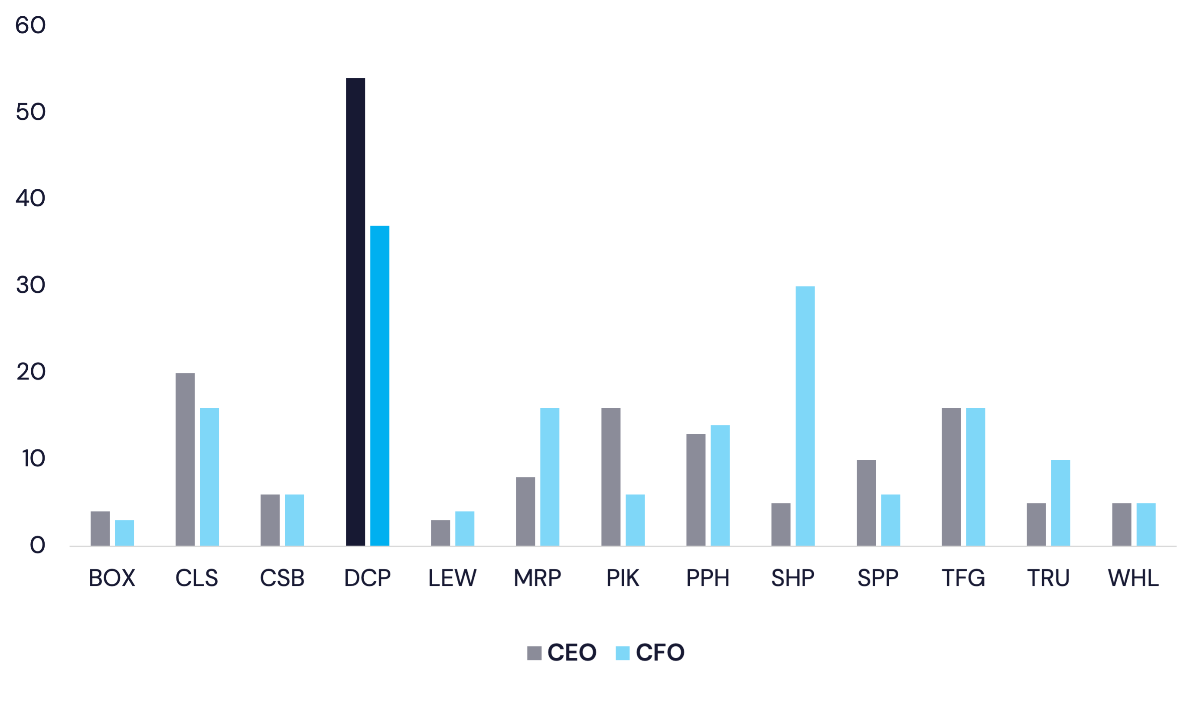
The next chart shows the number of active director positions held by each of the CEOs and CFOs of the listed retailers. On average, an Executive Director currently serves on 12 boards.
But Dis-Chem is a proper outlier. Its CEO is an active director of 54 entities, and the CFO servers on 37. Simply looking at the names of these entities suggests a host of individual stores, distribution assets and operating subsidiaries.
Given such a dense organisational structure, no wonder the poor Dis-Chem executives are searching for some headspace for better decision-making agility. Shareholders will be hoping the changes brings some operating leverage to an otherwise strong top-line performance.
Total number of director positions held by Executive Directors of listed retailers
Burnt in sweat
Anyone who has spent time in a gym recently, or on a caffeinated Sea Point Promenade walk, will recognise the distinctive orange tag of one of South Africa’s most desirable activewear brands: Burnt Studios.
This local brand has grown to 20 stores in many premier malls across the country. There’s even a dedicated Clubhouse in Cape Town – for that post-prom protein freezo.
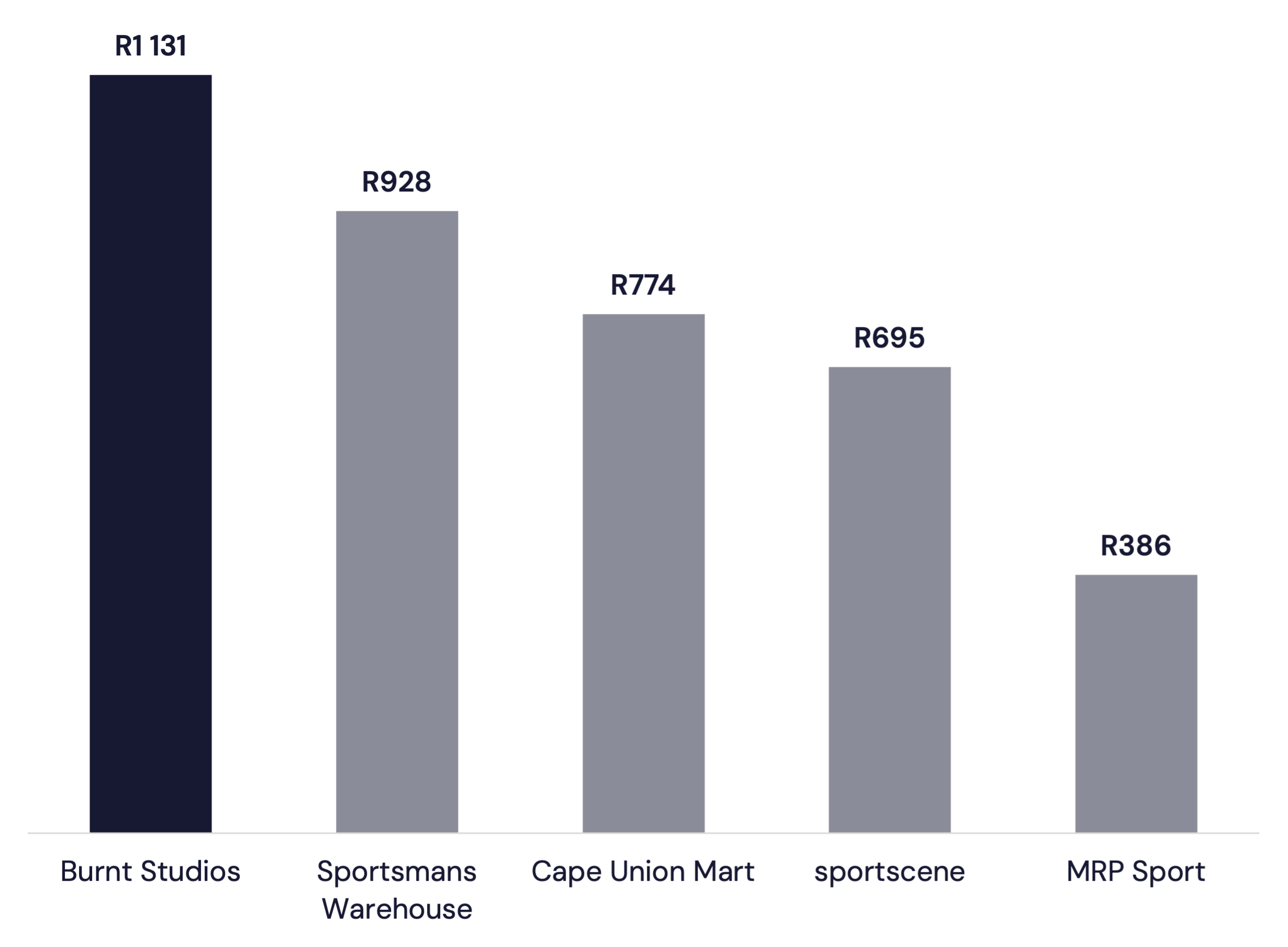
But the price of Burnt’s form-fitting garments may burn through many budgets. Compared to other sports retailers, it has the highest average transaction values in our data – a clear signal of the brand’s premium positioning.
Average transaction values at selected sports retailers
Dad-bod cynicism aside, we should all celebrate local success stories like Burnt. To build an aspirational, growing brand in a cut-throat industry and zero-growth economy deserves applause.
Strong signals
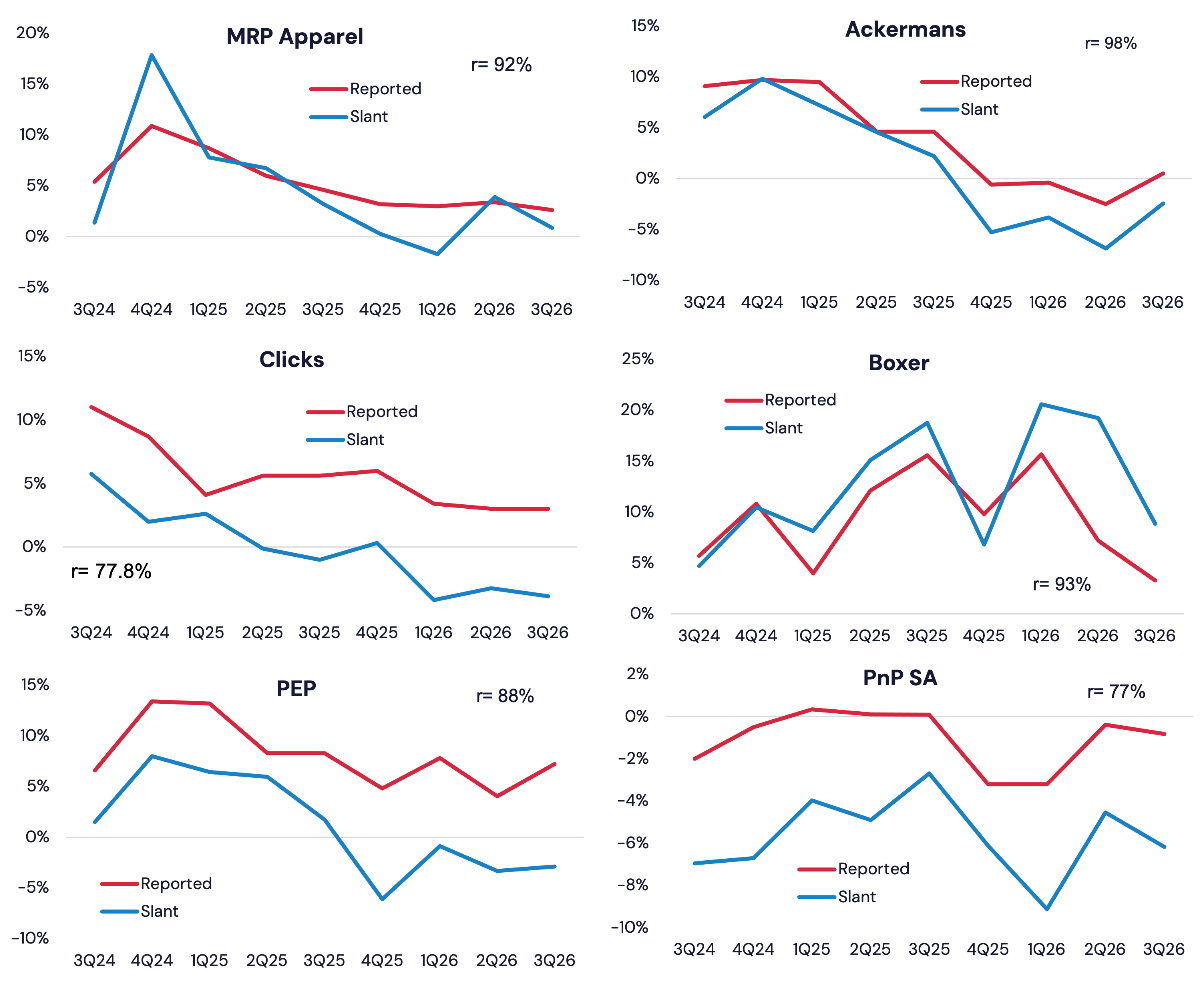
We’re proud of the ongoing trend correlation between our bank transaction data and companies’ reported results. With a nine-quarter track record, Slant’s view of consumer spending is proving to be a reliable leading indicator of sales growth momentum at listed retailers.
Here are some examples:
This Currents is already longer than usual, so we won’t share our normal market share change charts. Most retailers provided an update to the end of September, so we’ll hold the market share charts until next time.
Want to see the full picture? Contact us and become a subscriber.