

Since this time last year, we’ve been flagging a resurgent Shein as a major trend impacting the Apparel market. Over the period, the share prices of the listed retailers have declined ~20%, with TFG the hardest hit – the group’s share price has halved.
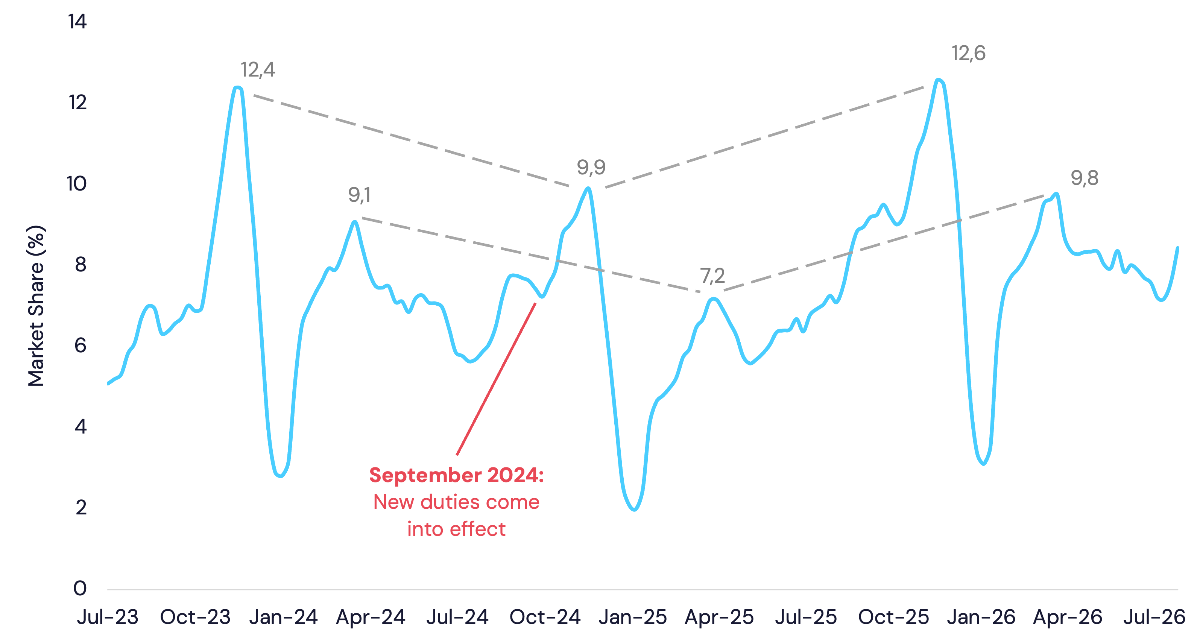
Higher and stricter import duties, introduced in late 2024, were intended to level the playing fields for local retailers competing with the Chinese giant, and their effects over the following nine months were indeed significant. The chart below shows how Shein’s market share declined after the duties came into effect, until about July the following year, when demand suddenly accelerated again.
As we’ve noted before, Shein’s second wave of growth coincided with declining average transaction values at the retailer, meaning that growth has been driven entirely by increasing the number of customers.
Shein market share fluctuations: July 2023 – July 2026
It’s easy to get distracted by how Shein operates in South Africa (are import duties fair, what is the obligation for local employment etc?) but these debates are not Slant’s territory.
Instead, we’ll do what we do best: unpack the data to give our clients a deeper understanding of the underlying shifts in the South African Apparel market in general.
You need to be logged in to read further.
If you are a client, please reset your password and login using your corporate e-mail address.
Slant offers solutions for investors, corporates and data partners. Click the button below to get in touch and find out how our alternative data and class-leading research can help you.